
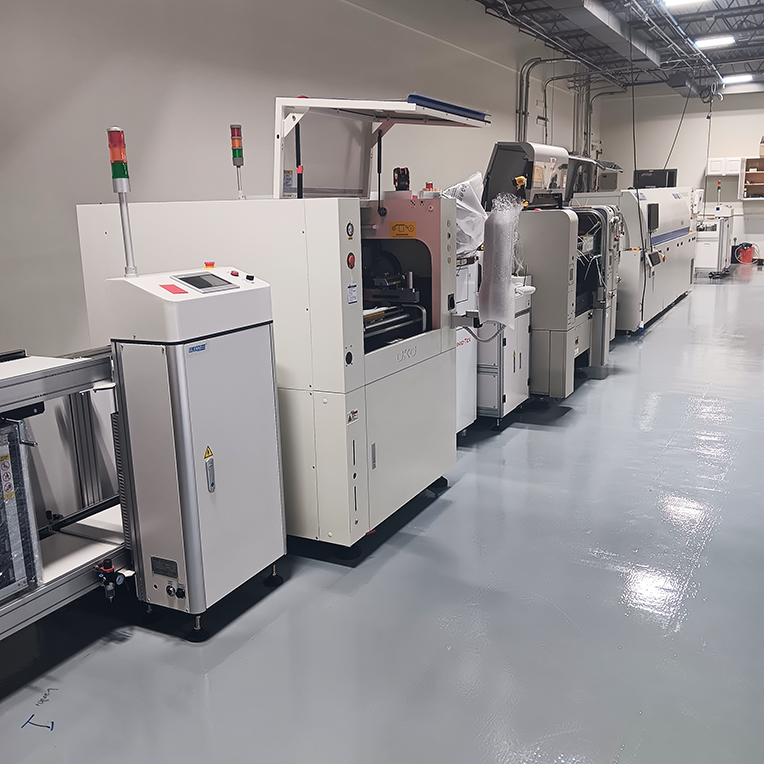
At MFG Innovations, we’ve built our SMT production line around precision, consistency, and complete process control. Every stage—from solder paste printing to reflow and final inspection—operates in perfect synchronization to ensure unmatched reliability. Our line features advanced 3D SPI, 3D AOI, and in-house X-ray inspection, providing real-time feedback and full traceability. We maintain strict ESD controls, optimized reflow profiles, and continuous monitoring to guarantee stable, repeatable results. Supported by skilled technicians and robust data tracking, MFG Innovations can rapidly detect and correct any process deviation. The result is a state-of-the-art production line that delivers high-yield, high-quality assemblies meeting the most demanding industry standards.
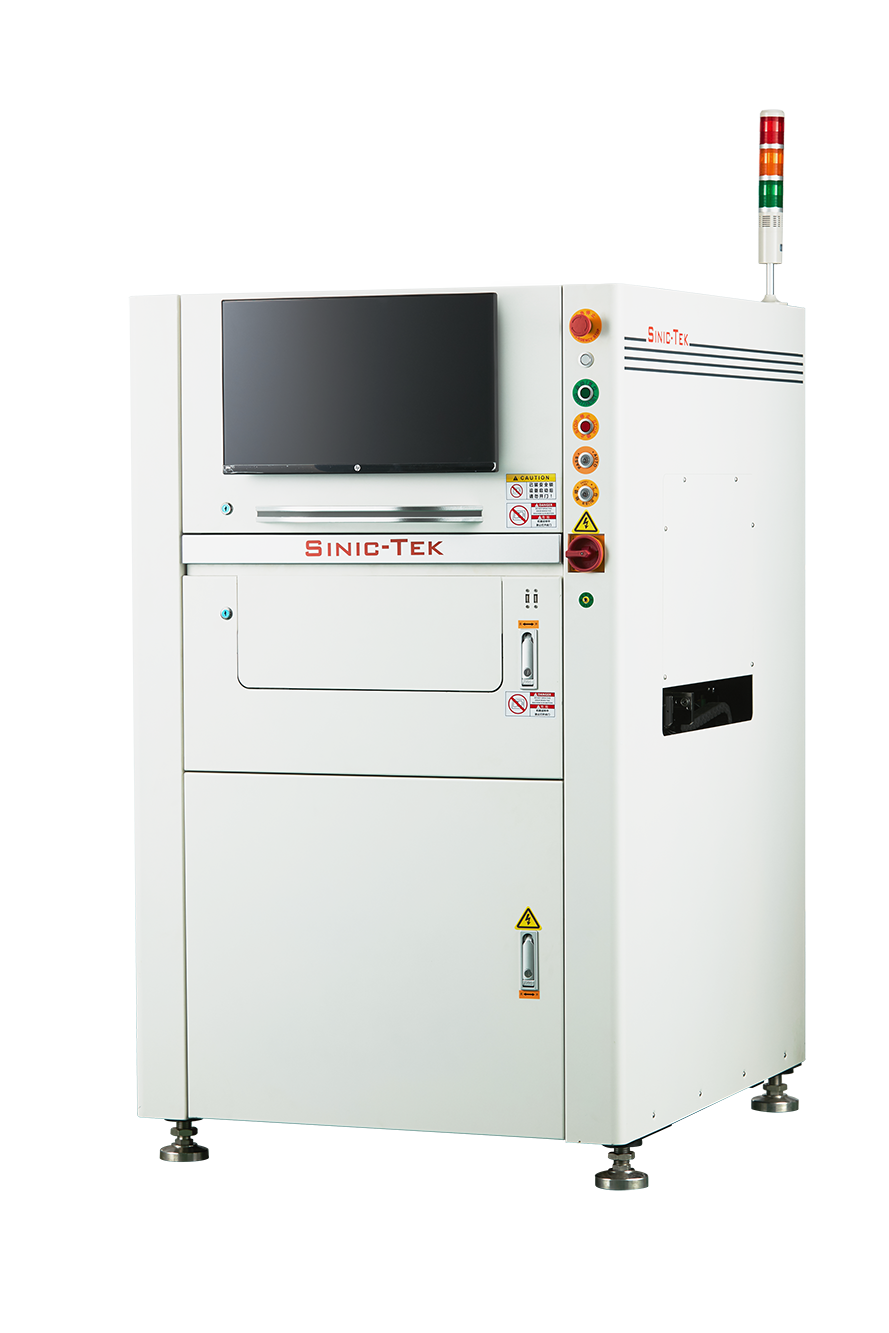
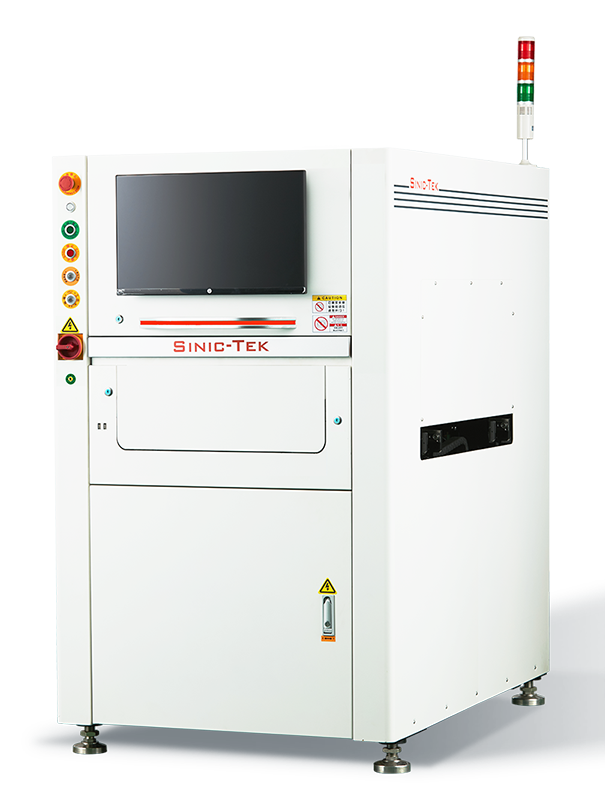
A 3D Solder Paste Inspection (SPI) machine, such as those manufactured by Sinic-Tek, is an essential part of any high-quality SMT production line. Using advanced 3D measurement technology, Sinic-Tek’s SPI systems precisely evaluate solder paste height, volume, and alignment across every pad.
This three-dimensional accuracy allows for early detection of print defects—such as insufficient, excessive, or misaligned paste—before component placement, greatly reducing rework and scrap. Real-time feedback helps maintain consistent printer performance and process stability. With Sinctek’s 3D SPI solutions, manufacturers achieve higher yields, superior reliability, and consistent quality in every PCB assembly run.
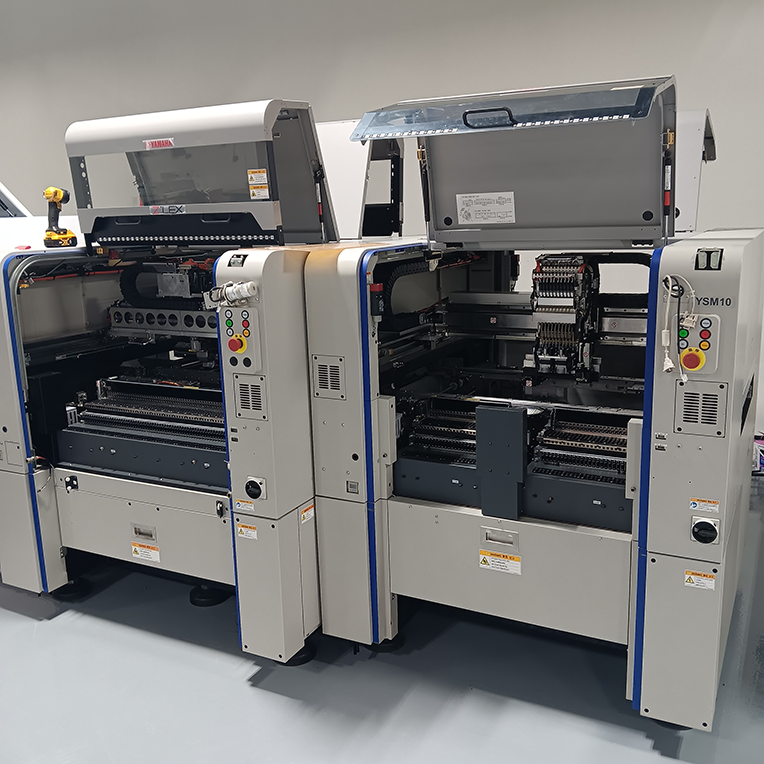
Using the Yamaha YSM20R and YSM10 together creates a perfectly balanced SMT production line that combines high-speed throughput with exceptional flexibility. The YSM20R, Yamaha’s flagship dual-beam modular mounter, delivers industry-leading placement speeds of up to 95,000 components per hour. Its precision, wide component range (0201 chips to 55 × 100 mm parts), and smart feeder systems make it ideal for handling the majority of placements in volume production.
Complementing it, the YSM10 serves as a versatile single-beam mounter optimized for smaller lot sizes, specialty components, and rapid product changeovers. With its compact footprint and ability to handle ultra-small components down to 03015 mm, the YSM10 ensures continuous productivity, even for complex or prototype builds.
When integrated in the same line, the YSM20R provides raw speed and efficiency, while the YSM10 adds flexibility and adaptability — enabling manufacturers to handle both high-mix, low-volume and high-volume, low-mix production without equipment changes. Both machines share Yamaha’s intelligent software ecosystem for centralized programming, real-time monitoring, and automatic optimization, ensuring perfect synchronization and maximum uptime.
Together, the YSM20R and YSM10 deliver a cost-effective, scalable solution that enhances line utilization, reduces downtime, and maintains the highest quality standards in modern SMT assembly.
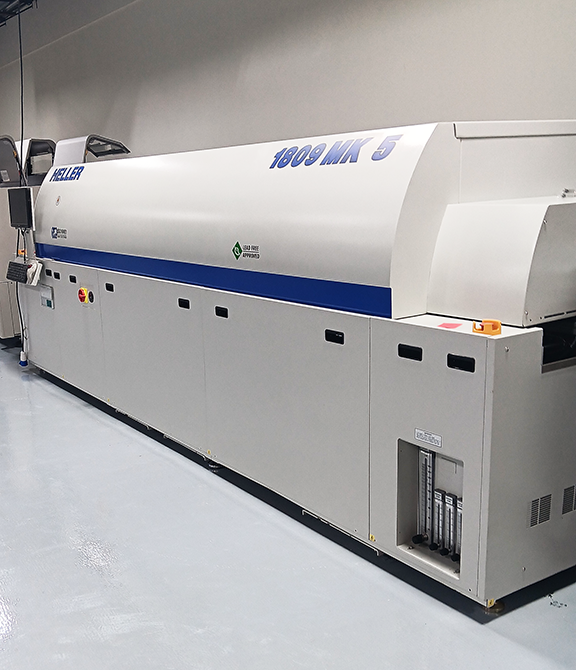
The Heller 1809 MK5 multi-zone reflow oven brings exceptional thermal precision and flexibility to SMT production. Its multiple heating and cooling zones allow for fine control over temperature profiles, enabling “profile sculpting” that minimizes liquid-time and delta-Ts, for both standard and lead-free soldering.
The oven’s enhanced heater modules and uniform gas management system reduce nitrogen and energy consumption by up to ~40%, while the fast “Blow-Thru” cooling delivers >3 °C/sec cooling rates—even on heavy boards. With extensive recipe storage (hundreds of profiles), real-time monitoring, and high throughput, the 1809 MK5 maximizes yield, minimizes defects, and significantly lowers total cost of ownership.
A 3D Automated Optical Inspection (AOI) system is a vital quality control tool in today’s advanced SMT manufacturing lines. Unlike traditional 2D systems, 3D AOI uses structured light and multiple camera angles to measure component height, coplanarity, and solder joint volume with exceptional accuracy.
This allows for precise detection of defects such as lifted leads, insufficient solder, or component misalignment that 2D inspection might miss. By providing detailed 3D imaging and real-time data, 3D AOI systems enable faster root-cause analysis and continuous process improvement. The result is higher yield, fewer false calls, and greater confidence in overall assembly quality.
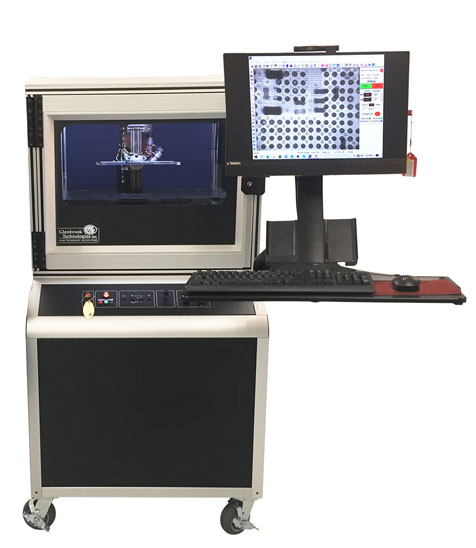
X-ray inspection is vital in modern SMT manufacturing, offering visibility into hidden solder joints on BGAs, LGAs, and QFNs that optical inspection cannot see. It detects voids, insufficient solder, bridges, and misalignments without damaging the board. Implementing 2D and 3D X-ray inspection enables early defect detection, reducing rework and improving reliability.
Most SMT assemblers lack in-house X-ray systems and only perform scans when a problem is suspected, delaying feedback and risking quality issues. In contrast, our dedicated in-house X-ray capability allows continuous, real-time monitoring during production. This ensures immediate detection and correction of any process deviation, maintaining consistent quality and faster throughput.
By combining precision imaging with instant process feedback, our X-ray inspection transforms quality control into proactive process assurance—enhancing reliability, minimizing downtime, and guaranteeing the highest standards in every PCB we assemble.